The operator
We built AI on ourselves first.
We install AI into the work you already know how to do — for people who run crews, classrooms, kitchens, and books. Same method every time: diagnose the work, build the brain, hand you the keys. The brain belongs to the human doing the work.
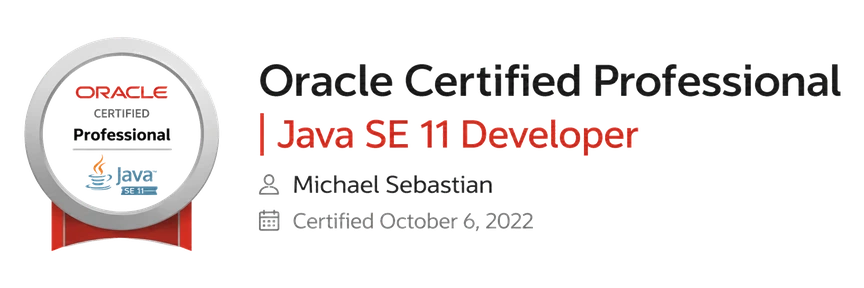
Michael Sebastian · Founder, Branded Mayhem Collective
Three years installing AI into one role — our own.
We run a brand studio: Branded Mayhem Collective. Small team, founder-direct. In 2023 we started installing AI into the work itself, not as a tool laid on top. Three years later, the install layer is worth more than any deliverable the studio has shipped.
Our own brain is two-and-a-half million tokens of decision history, brand frameworks, and client context. It runs as an MCP server on a branded subdomain and answers from any LLM that speaks the protocol. When the model changes — and it will — the install moves with us.
br8n is what we built so other operators can have the same thing. Same architecture, same portability, same respect for the work. The unit is the person.

The bridge
We’re the humans between you and the vendors.
You’ve probably tried AI — a subscription, a chatbot, a demo that impressed nobody by Thursday. It didn’t stick because the part that makes it stick is the part nobody sells you. So we sit between the vendors and the work. You spend an afternoon with us going through how you really work — the files, the proposals, the Monday reports. By the end of the week your own files answer your questions, in your voice, on your machine.
- RespectThe employment. The company gets the efficiency it paid for.
- RespectThe employee. The person keeps the thinking — and the brain.
- RespectThe business. We’re what bridges the three.
Who owns the intelligence?
There’s an old courtroom scene — a captain arguing that the side that ownsan intelligence is the side that decides what gets built with it. You don’t need the reference to feel the point.
Swap “an intelligence” for the working intelligence you’ve built at your job — your context, your patterns, the memory of how you work — and the question stops being abstract. Right now it belongs, by default, to the platform you built it on. The leverage runs one direction, away from you.
The install we build runs the other direction. The brain belongs to the person who owns the work. Same architecture as the vendors’ lock-in version. Different owner. (If you know it: Picard’s argument in The Measure of a Man, run in reverse.)
Memory replaced the model as the moat.
The moat moved. It used to be the model; now it’s what the model remembers about you.
- First era — the model was the moat. Benchmarks, context windows, training runs. That race is mostly over; frontier margins have compressed.
- The era we’re entering — memory is the moat. The platforms holding your accumulated working intelligence have built the deepest lock-in the industry has produced. Not because the model is better, but because the cost of abandoning six months of compounding context is unthinkable.
Your AI working intelligence is the most valuable professional asset you’re building this year. By default it belongs to the platforms, not you. We built br8n to change that.
Pick your fighter carefully. Or build your own.

The counter-move
Plug your brain into the work. Keep it.
The Personal Brain is the same architecture as the corporate version — files in, brain out, retrievable from any AI tool. The difference is the owner. Your brain lives on a subdomain you brand. The data is yours. The retrieval is shaped to your role, not a job-family average.
Change jobs, and your brain comes with you. Get cut to AI, and your asset is the brain you built — not just the paycheck. When the next model launches, the install adapts instead of starting over.
Plug your brain into the work. Let it share in the value. Don’t hand it to a platform racing to do without you.
Ownership is literal: files, not a login.
Every brain we build belongs to whoever it was built for. Personal Brains stay with the person; Company Brains stay with the company. Neither traps the other. One install survived a full infrastructure migration intact and runs at $0 a month — portable intelligence with no platform in the middle.
- OPERATOR·01Personal5,802 unitsLIVE
- STUDIO·OPSDecisions0,028 unitsLIVE
- OPERATOR·02LMS · Ops0,247 unitsSTAGE
- HOSPITALITY·01Client Ops0,089 unitsPILOT
- CONSTRUCT·01Construct0,124 unitsPILOT
- BR8NPersonal---- unitsSTAGE
Two days ago at Meta
They’re training their replacements. On themselves.
You own it
Reach it from any LLM.
The brain is a tool, not a walled garden. Any model can query it over MCP — so when you change jobs, change tools, or the next model launches, it comes with you.
- → connecting to your-name.br8n.io · MCP
- ✓ brain online · tools registered
- what did we decide about the Q2 positioning, and why?
- You moved off the model-as-moat frame to memory-as-moat — because frontier margins compressed and lock-in now lives in accumulated context, not benchmarks.
- cited · decisions/2026-positioning.md · memory/moat.md
The rules
Principles we won’t break.
The brain is yours.
Not ours, not the platform’s. Gated to a subdomain you brand. You walk away with it the day you leave the job. The portability is the product.
One human at a time.
Same architecture every install: files become a corpus, retrieval shaped to your role, skills inside the work you run. Scope changes by tier; the respect doesn’t.
AI behind you, not in front.
The install removes the work that wasn’t doing anything for you. It doesn’t replace your judgment or your relationships. If anything’s questionable on those terms, we say so on the call.
One call, two humans.
Thirty minutes. You talk, we listen. If the install isn’t a fit, we tell you who to talk to instead. No funnel, no deck.
Common questions
Asked, answered.
What actually happened at Meta — and why does it matter here?
On May 20, 2026, Meta started laying off about 8,000 employees. In a leaked all-hands recording, Mark Zuckerberg told staff their devices are being tracked to train Meta’s AI. The workers being cut are training the systems that replace them. [source]
The week before, Marc Andreessen called the labor-displacement narrative “100% incorrect” — companies were overstaffed by 50–75% after COVID, and AI is the convenient excuse. [source] Both can be true. The pattern is durable either way: capture the worker’s knowledge first, then remove the worker.
What is the asset they’re actually after?
Your fingerprint is the real training data. Every time you write to ChatGPT, refine a Claude project, or accept a Copilot suggestion, you teach that platform how you work — your vocabulary, your decision patterns, the shape of your judgment. It’s the working intelligence the company actually paid for.
The years of judgment that made you the person they hired get harvested into a training set you didn’t consent to and can’t take with you when you leave. The install runs that the other direction.
Who owns the brain you build?
Whoever it was built for. Ownership is literal: you hold the source files, the schema, and the deployment config — not a login. That’s why an install can survive a platform change and keep running.
How does this connect to the rest of br8n?
br8n is the AI consultancy arm of the Branded Mayhem Collective. The method is public and taught in the Lab; the work is the same method run on your real operation, with our hands in the room. Start with the Where-Are-You quiz, or see The Install for the full offer ladder.
Who shaped this
None of this is original. The method, the voice, and the design all have teachers — Nate B. Jones, Ethan Mollick, Chris Do, Simon Sinek, and the rest, named and linked.
See the full lineageFirst call is on us.
Thirty minutes, two humans. If the install isn’t a fit, we’ll tell you who you should be talking to instead.